Track
On
Music
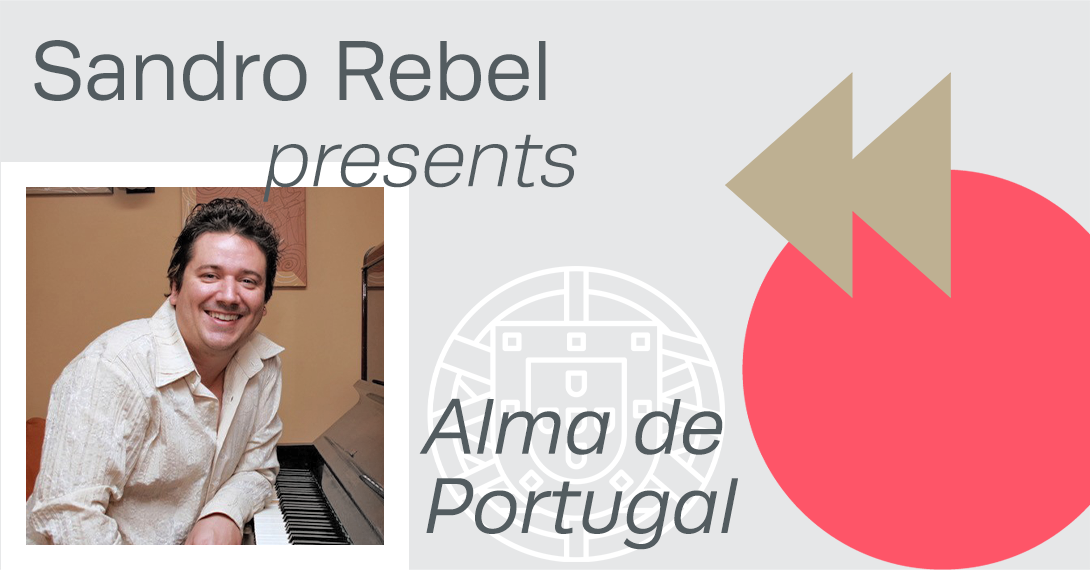
Sandro Rebel presents Alma de Portugal
"Alma de Portugal" means "Soul of Portugal", and what better way to represent the music of that country than through Fado, Portugal’s most famous musical genre? Written and produced by Los Angeles-based musician Sandro Rebel alongside local musicians of Lisbon, Alma de Portugal was produced to cover both the traditional and modern forms of Fado.
Sandro Rebel is a Brazilian-born pianist/keyboard player and composer currently living in Los Angeles. He has been in the music business for over 30 years, having performed at iconic venues worldwide and landed placements on Netflix and Spotify's Editorial Playlists.
Hi Sandro! Please tell us how "Alma de Portugal" was conceived.
I was given clear project instructions from Megatrax's Director Derek Jones, which included some reference songs. Despite my familiarity with the style, I wanted to make sure I'd address all creative requests. I started taking more specific notes while listening to the reference material. I would focus on identifying more specific signature elements such as lyrics, instrumentation, keyboard sounds, beats, the influence of the African and Brazilian immigrants and their music in the modern fados, etc.
During that period, I also started reaching out to potential musicians, singers, and recording studios to check on their availability. Portugal-based amazing composer and musician Fred Martins was the first name that came to mind when I was invited for this project, and I was excited to have him as a collaborator and co-writing partner.
Could you talk us through the recording process?
While I am based in Los Angeles, most of the project personnel was based in Lisbon, Portugal. With that being said, we had to deal with a challenging 10-hour time difference between us when coordinating everybody's schedules.
Fred and I started drafting the initial lyrics, melodies, chord changes, and arrangements, often revisiting, discussing, and polishing them. Once the songs were finished, it was time for us to move on to the recording studios. Thanks to today's technology, I was able to follow all sessions done in Portugal in real-time, making any necessary adjustments on the spot. Fortunately, I didn't have to deal with any language barriers since I happen to speak Portuguese.
Most songs for the more traditional side of the project had the musicians and singers in Lisbon track together as a "live 3-piece band" without overdubs. The modern side of the project also had keyboards and programming produced mostly by myself here in Los Angeles. Once I had a good working version of the song, I would send those tracks to Portugal and have the singers and additional musicians record their parts.
Halfway through the project, Mr. Martins went to Rio de Janeiro for a few concerts. Later, in the last days of the project, we also decided to use another musician in Brazil. So yes, a couple of times we were dealing with 3 different time zones!
How would you describe the music of Portugal, particularly Fado? What were your musical influences in the making of this album?
Fado from Portugal is a passionate, dramatic style. The word "fado" itself means fate. Some will attribute Fado's origins to the Arab invasion, others to the songs sung by the Portuguese sailors and their rich story and important contribution to the country. Common themes for lyrics are suffering, daily events, longing, jealousy, nature, and nostalgia. Singers are usually accompanied by a couple of acoustic guitars (Guitarra Portuguesa and Viola de Fado).
Fado singers, even on pop-ish songs, usually take more rhythmic liberties. Occasional ritardandos at the end of the phrases and the use of fermatas really set the pace of the music. Singers' melodic improvisations often resemble the quarter-tone nature found in music of the middle-east.
Portuguese artists such as Amália Rodrigues, Ana Moura, Carminho, Cristina Branco, Mariza, Raquel Tavares, Carlos Do Carmo and Carminho were definitely some of our influences when writing this album.
How did you get your start in creating music?
Interestingly enough, most of the work I've done as a session pianist and keyboardist for the past 3 decades would seldom have specific written-out parts. I'd say that having to come up with those parts myself is sort of creating additional music to existing material. Also, I'll never forget the day I was noodling around my keyboards during a rehearsal break and one of my bandmates asked:
"What is that, is that something that you wrote?"
"Love this, where can I hear the whole track?"
I started to notice this happened quite often from musicians with diverse musical backgrounds. That made me realize I had a calling and had to "officially" start composing.
Tell us a bit about the work you’ve done in film/TV/advertising. What are some placements you're most proud of?
Each project has its unique challenges, whether they are creative or from a business standpoint. I'd say all projects made me proud in one way or another. "Alma de Portugal" is my 6th project for Megatrax. From Brazilian soap operas to thousands of streams and listeners on Spotify, my compositions are now played in over 40 countries worldwide.
However, given the high production budgets found on Brazilian soap operas, their popularity, and their importance in a country with over 200 million people, I definitely put the soap opera placements in a very special place. I am excited to see the impact of "Alma de Portugal", though.
Tell us about your upcoming projects! What does 2023 have in store for you?
I am really looking forward to 2023! Me and Megatrax's co-founder and CCO/composer John Dwyer wrote a great Bossa Nova album which is in its mixing stages and will be released next year. Speaking about Bossa Nova, Brazil is one of Megatrax's biggest markets and we've been also discussing doing albums covering most Brazilian rhythms in a near future.
Further, the world has gone global and so did the music. Remote collaborations have become a reality and they are here to stay. Add that to my 35+ countries touring experience as a keyboard player playing American, Persian, Latin and African music and we get the crossover music that is both my inspiration and trademark as a composer.
Listen to Alma de Portugal here.